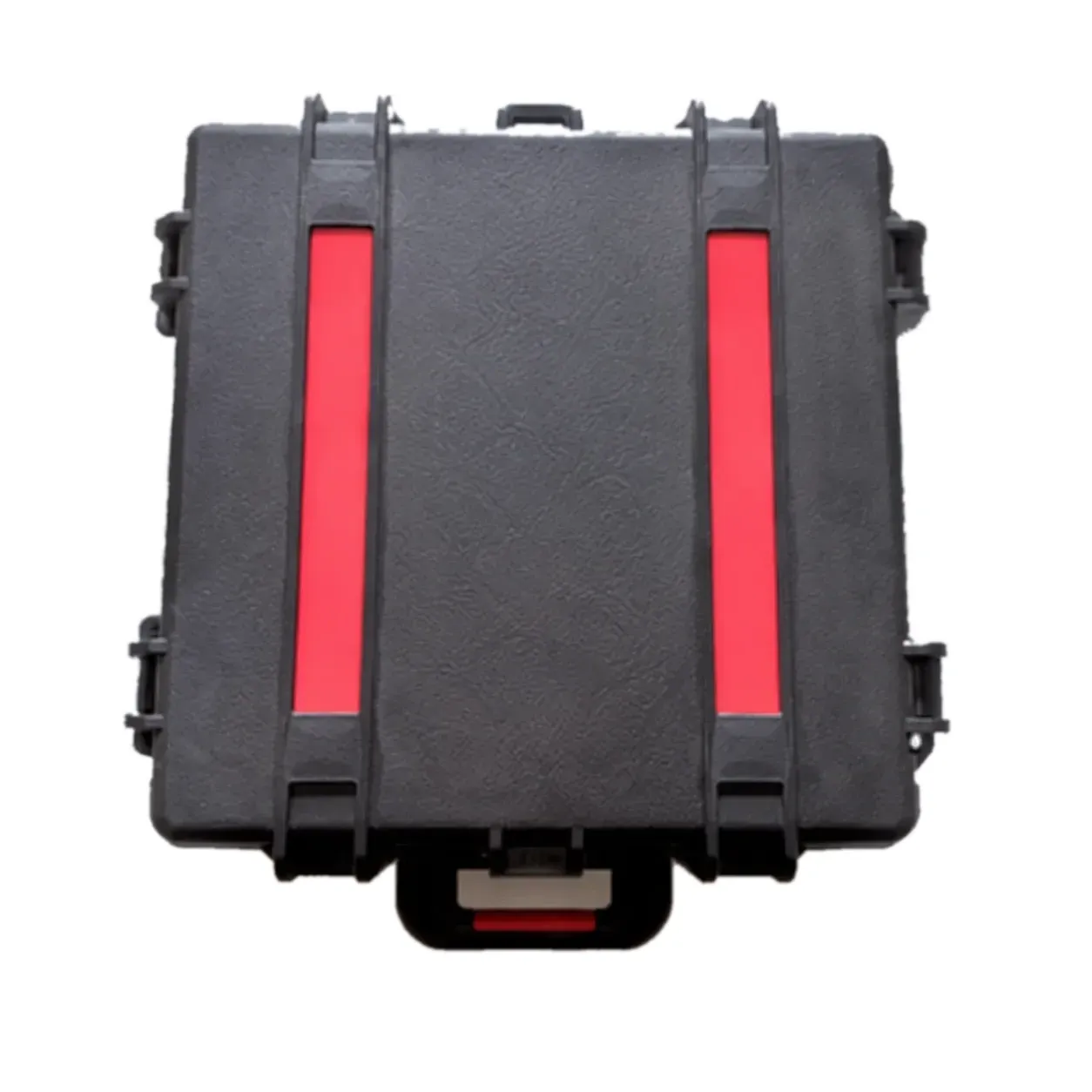
How to Tell If a Hard Case Is Really Waterproof
The short answer
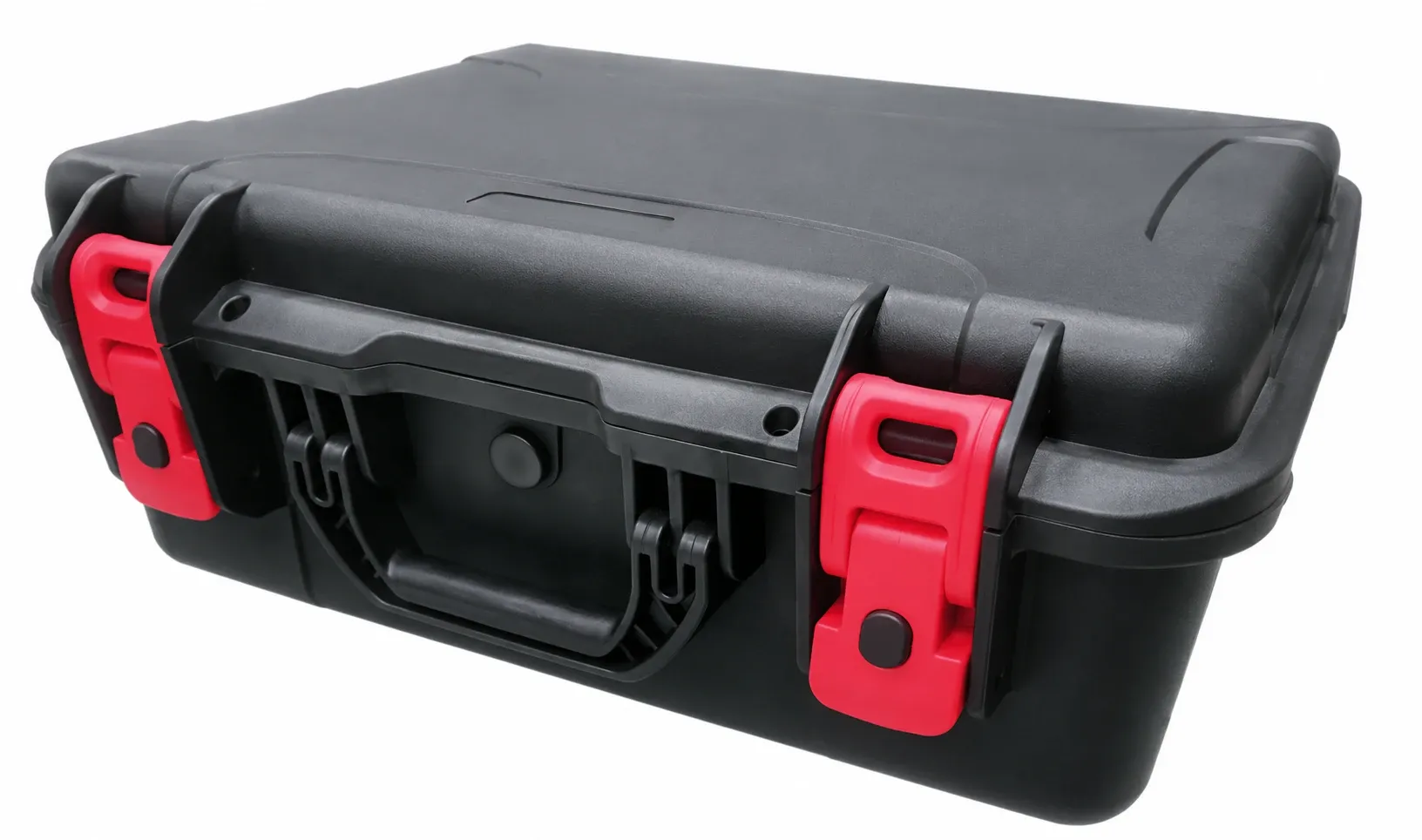
"Waterproof" on its own is a claim, not a measurement. Judge a hard case by three things: what test sits behind the word, what you can see on the case itself, and what your actual use is. A case that keeps rain out on a truck bed is not automatically a case you can leave standing in water — so match the protection to the job, and ask for the test basis before you order. This applies whether you call it a toolbox, a hard case, a waterproof case or an equipment case: the buying mistake is always the same — trusting one word instead of checking what it means.
Step 1 — Ask what the word means: rating and test report
Waterproofing is normally described with an IP rating: two digits after "IP". The first digit is about dust, the second about water, and a higher second digit means stronger protection against water. The rating only means something if it comes from a test — so ask the supplier which rating applies to the model you want, and what test it is based on. A rating with no test behind it is just words on a page.
On this site, the spec table for each model lists Waterproof, and no IP number is published for these models. If your use needs a specific rating, say so in your inquiry and ask for the test basis for that model — do not order on the word "waterproof" alone.
Step 2 — Look at the lid seal, especially the corners
Water gets in where the lid meets the base. Check that the seal runs unbroken all the way around the lid, with no gaps — and look hardest at the corners, because that is where a seal most often fails. If you are comparing cases in person, run a finger along the seal and look at the corners before anything else. If you are buying from photos, ask the supplier for a close-up of the lid edge and the corners.
Step 3 — Check the latches close evenly
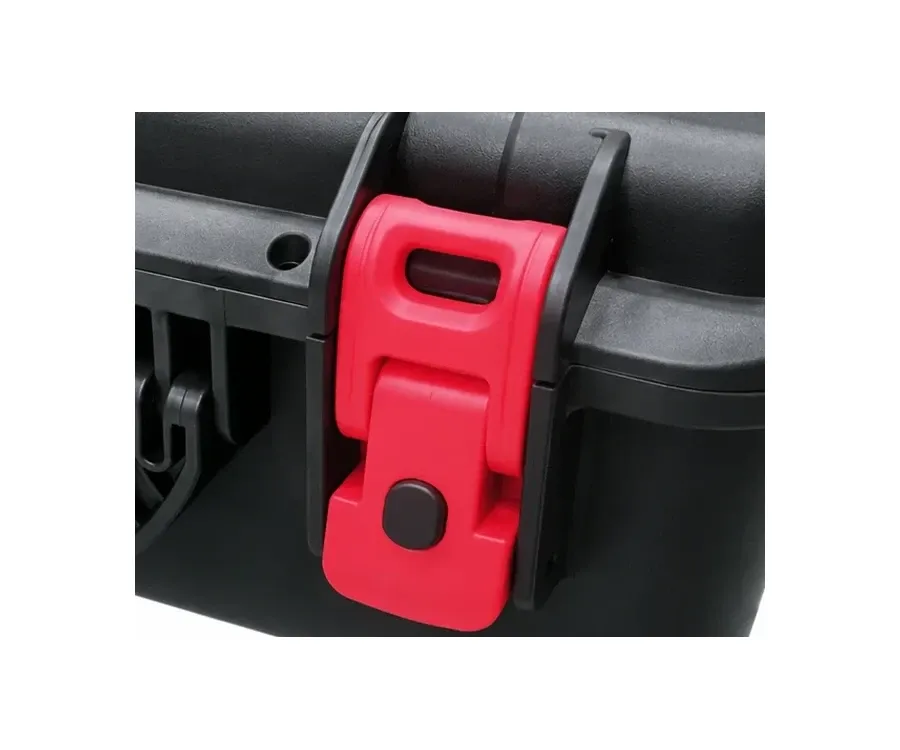
Latches do the work of pressing the lid onto the seal. They should close firmly, stay closed, and press evenly — a latch that is loose on one side leaves a gap on that side, however good the seal is. Look at the latches on all sides of the case, not just the front. The close-up below shows the latches on our DY8810.
Step 4 — Match the protection to your use
Decide what "waterproof" has to survive for you before you buy:
- Carried through rain, or kept in a vehicle: rain and splashes are the test.
- Left outdoors or on a wet site: standing water and long exposure are the test — ask for the test basis, not just the word.
- Brief immersion or wash-down: say so explicitly in your inquiry. Do not assume a rain-proof case covers this.
Also remember that a case only protects while it is closed and its seal is intact. Opening it in the rain, or using it with a damaged seal, defeats the protection whatever the rating says.
Step 5 — Check the size at the same time
Waterproofing is only half the decision — the case still has to fit. These are five of our existing-mould models, with their real dimensions.
| Model | External (mm) | Internal (mm) | Waterproof |
|---|---|---|---|
| DY011# | 360 × 270 × 90 | 347 × 220 × 82 | Waterproof |
| DY705# | 425 × 320 × 115 | 420 × 265 × 112 | Waterproof |
| DY706# | 450 × 330 × 130 | 445 × 285 × 124 | Waterproof |
| DY007# | 470 × 360 × 148 | 465 × 310 × 140 | Waterproof |
| DY8810 | 517 × 430 × 150 | 483 × 363 × 140 | Waterproof |
Pick the smallest model whose internal length, width AND height are all larger than your equipment — see Guide 01 for how to measure by internal dimensions. A deeper version of the DY8810 is available on request; please mention your required internal height in your inquiry.
Ready to get a quote?
Send an inquiry with your model, quantity and required internal dimensions. Samples and small trial orders are available. If you have a specific waterproof rating you need, mention it in your inquiry and ask for the test basis. If you have drawings, please email them to a@ruvenixcases.com after submitting. Phone is optional — email is enough.