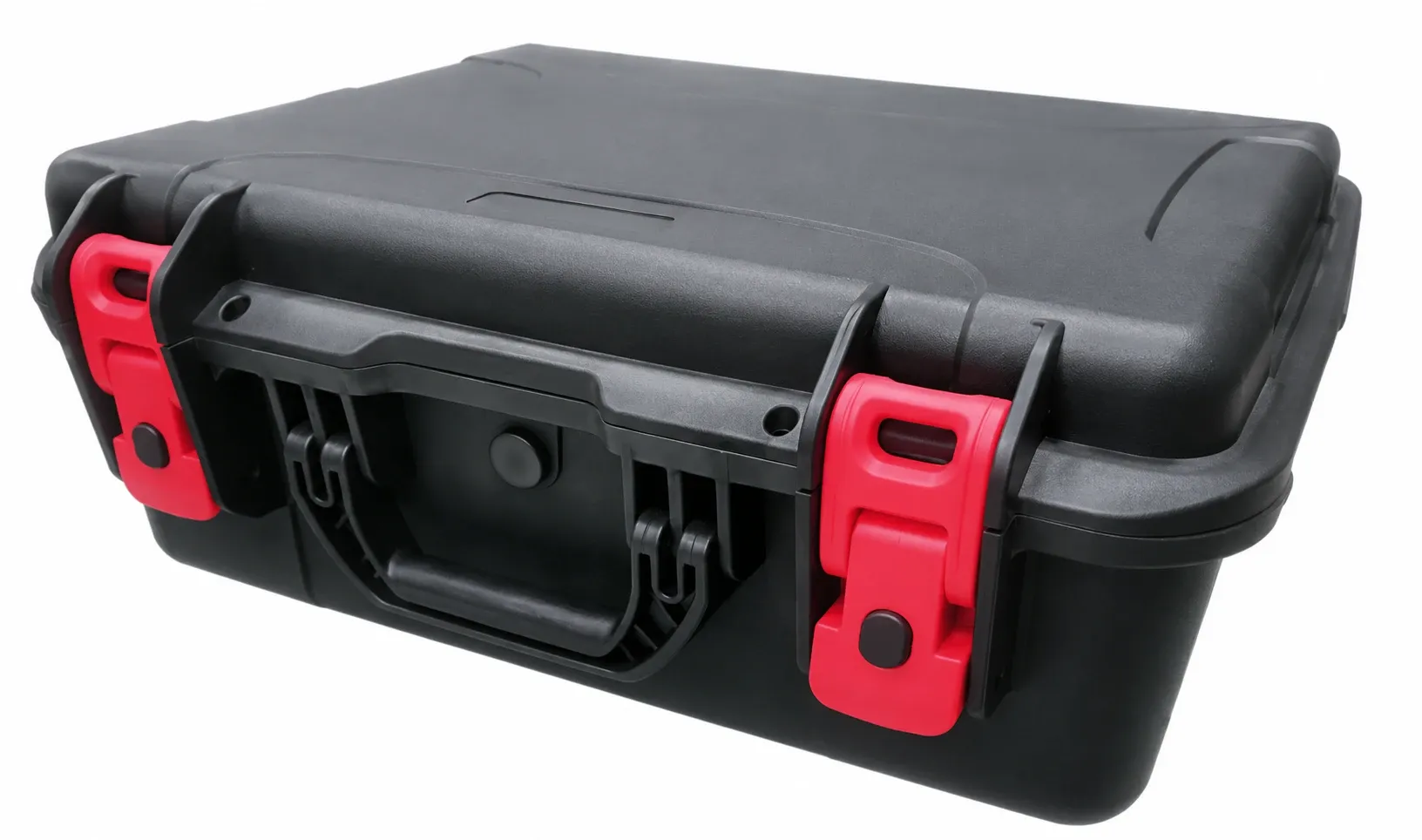
When Are Wheeled Protective Cases Worth It?
A wheeled case is worth it when the loaded case is heavy, has to travel a long way, or is moved often. Use these three questions — and the internal dimensions in our table — to decide.
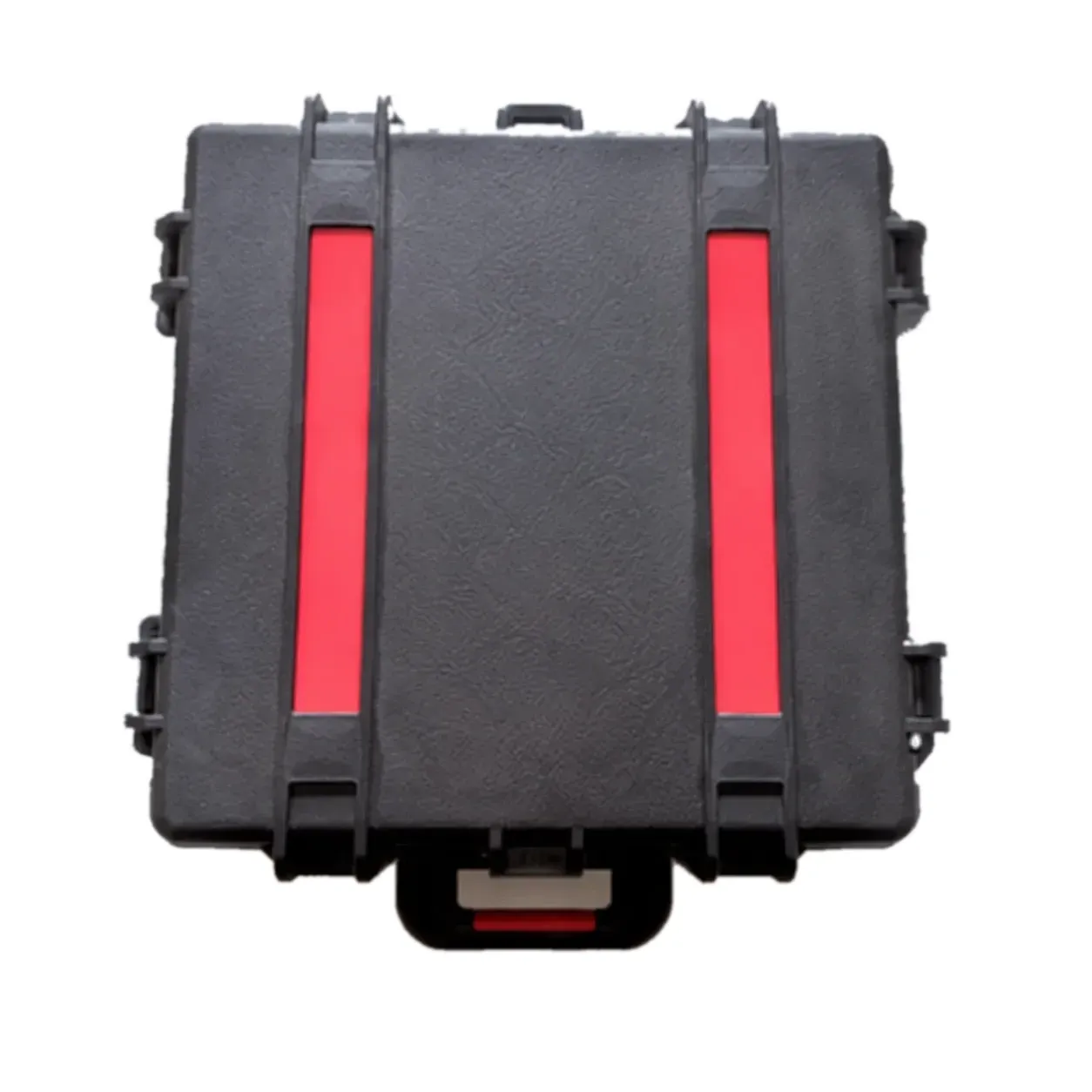
The short answer
A wheeled case is worth it when the case is heavy when loaded, or has to be moved a long way, often. If you carry it only a short distance — from a vehicle to a job, across a workshop — a carry case is usually simpler and lighter to handle. So the question is not "are wheels better", it is "how far, how often, and how heavy when loaded". A wheeled case is still a hard case first: check the internal size the way Guide 01 shows, the seal and latches the way Guide 02 shows, and the foam the way Guide 03 shows — wheels do not change any of that.
Step 1 — When wheels help
Wheels help in three situations: the loaded case is heavy to carry by hand; it has to be moved a long way, for example through an airport, a station, a large site or a warehouse; or it is moved often, every day or several times a day, so carrying it each time adds up. If two or three of those are true, a wheeled case is usually the right choice — pulling is easier than carrying the same load, and the case arrives without the carrier being tired out. Think about the heaviest load you will actually move, not the lightest, and about the longest distance, not the shortest.
Step 2 — When a carry case is the better choice
Wheels are not free. A wheeled case is a bigger, heavier case to lift when it has to be lifted — up stairs, into a vehicle, onto a shelf. If your journey is mostly stairs, rough ground, or short carries with a lot of lifting, a carry case can be easier: pick it up, put it down, done. The same applies if the case is small and light when loaded — wheels add little when there is not much to pull. So ask first: how much of the journey is pulling on a flat surface, and how much is lifting? If lifting is most of it, choose by internal size from the carry cases instead, and use the same three questions in Guide 04 to decide what goes inside.
Step 3 — Check the internal size the same way
Wheels do not change how to measure. Measure your longest, widest and tallest item (inside its foam, if you are ordering foam — see Guide 03), and pick the smallest model whose internal length, width AND height are all larger — see Guide 01 for how to measure. Do not choose by external size: two wheeled cases that look the same outside can differ a lot inside, and the internal height is the number buyers most often forget. These are our 11 wheeled models from existing moulds, with their real dimensions, smallest first by external length.
| Model | External (mm) | Internal (mm) | Waterproof |
|---|---|---|---|
| D02-1 | 463 × 370 × 210 | 437 × 308 × 164 | Waterproof |
| D05 | 510 × 395 × 257 | 460 × 335 × 210 | Waterproof |
| D07 | 517 × 430 × 240 | 483 × 363 × 220 | Waterproof |
| D08 | 576 × 363 × 257 | 520 × 296 × 210 | Waterproof |
| D12 | 580 × 410 × 230 | 500 × 340 × 205 | Waterproof |
| DY606B# | 615 × 435 × 325 | 510 × 385 × 300 | Waterproof |
| D13 | 620 × 620 × 260 | 545 × 545 × 210 | Waterproof |
| D09-1 | 677 × 535 × 304 | 595 × 460 × 255 | Waterproof |
| D09-2 | 677 × 535 × 364 | 595 × 460 × 315 | Waterproof |
| DY8812 | 720 × 500 × 270 | 590 × 420 × 210 | Waterproof |
| DY880 | 788 × 330 × 258 | 737 × 257 × 240 | Waterproof |
D09-1 and D09-2 share the same length and width and differ in depth — if the length and width fit but the height does not, check the deeper one before moving to a larger case. If none of these fits, other sizes can be made to order on request — all 81 models on this site are available from existing moulds.
Step 4 — Protection still comes first
A wheeled case is pulled, knocked and tipped more than a case that is carried and set down gently, so the seal, the latches and the foam matter at least as much as for any other case. Check the lid seal, especially the corners, and that the latches close evenly (Guide 02), and order foam cut to your equipment so nothing moves inside in transit (Guide 03). If your use needs a specific waterproof rating, mention it in your inquiry and ask for the test basis — no IP number is published for these models.
Step 5 — Decide in three questions
- How heavy is it when loaded, and how far does it travel? Heavy and far, often, points to wheels.
- How much of the journey is lifting — stairs, vehicles, shelves? Mostly lifting points to a carry case.
- What are the internal dimensions you need? Pick the smallest wheeled model whose internal length, width AND height are all larger than your equipment inside its foam.
If the answers point different ways, the lifting question usually decides it — a case that is hard to lift will be hard to live with, wheels or not.
Ready to get a quote?
Send an inquiry with your model, quantity and required internal dimensions — and tell us what goes inside the case and how it will travel, so we can judge the size, the foam and the protection against your equipment, not just against a name. Samples and small trial orders are available. If you have drawings, please email them to a@ruvenixcases.com after submitting. Phone is optional — email is enough.