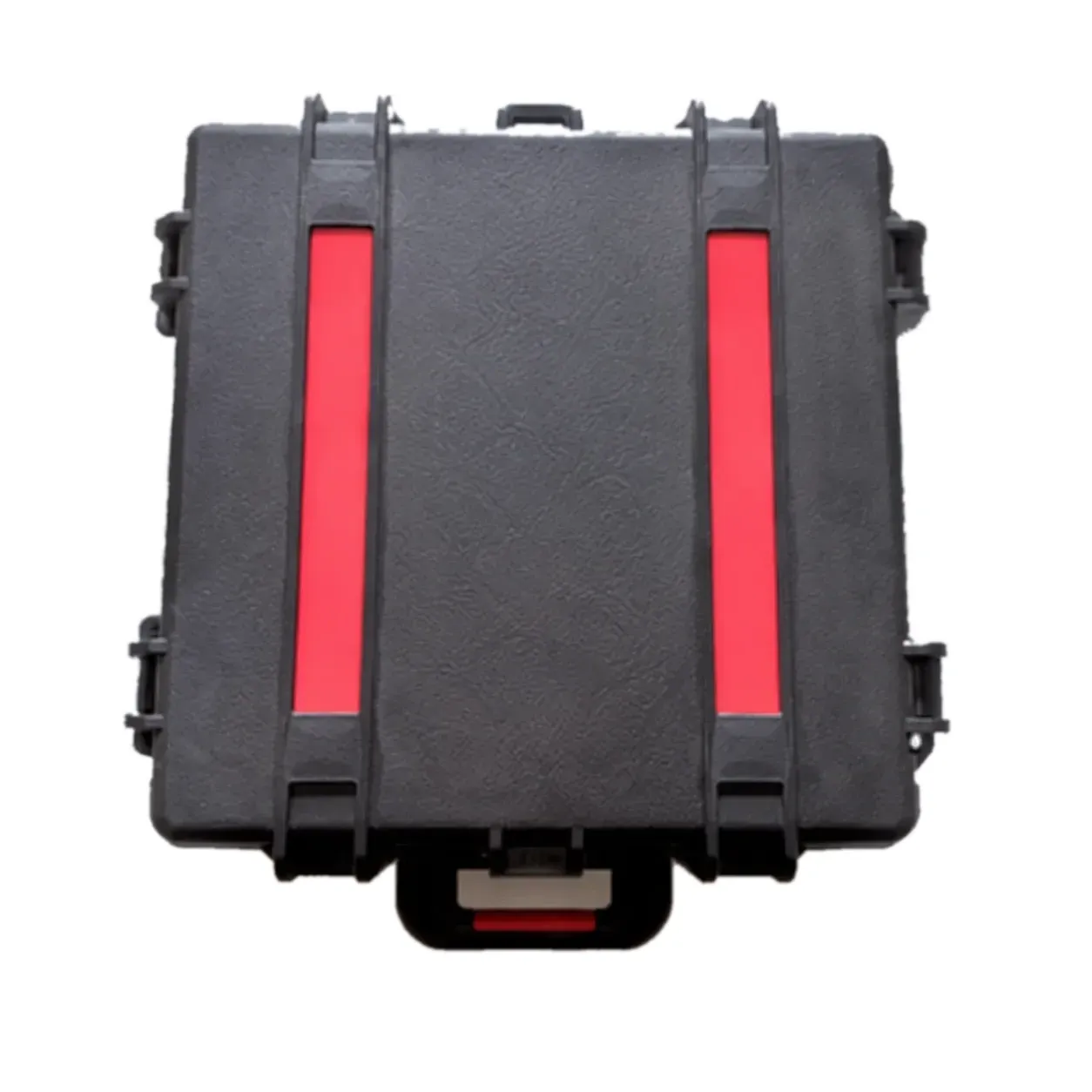
Toolbox vs Tool Box vs Equipment Case: What Is the Difference?
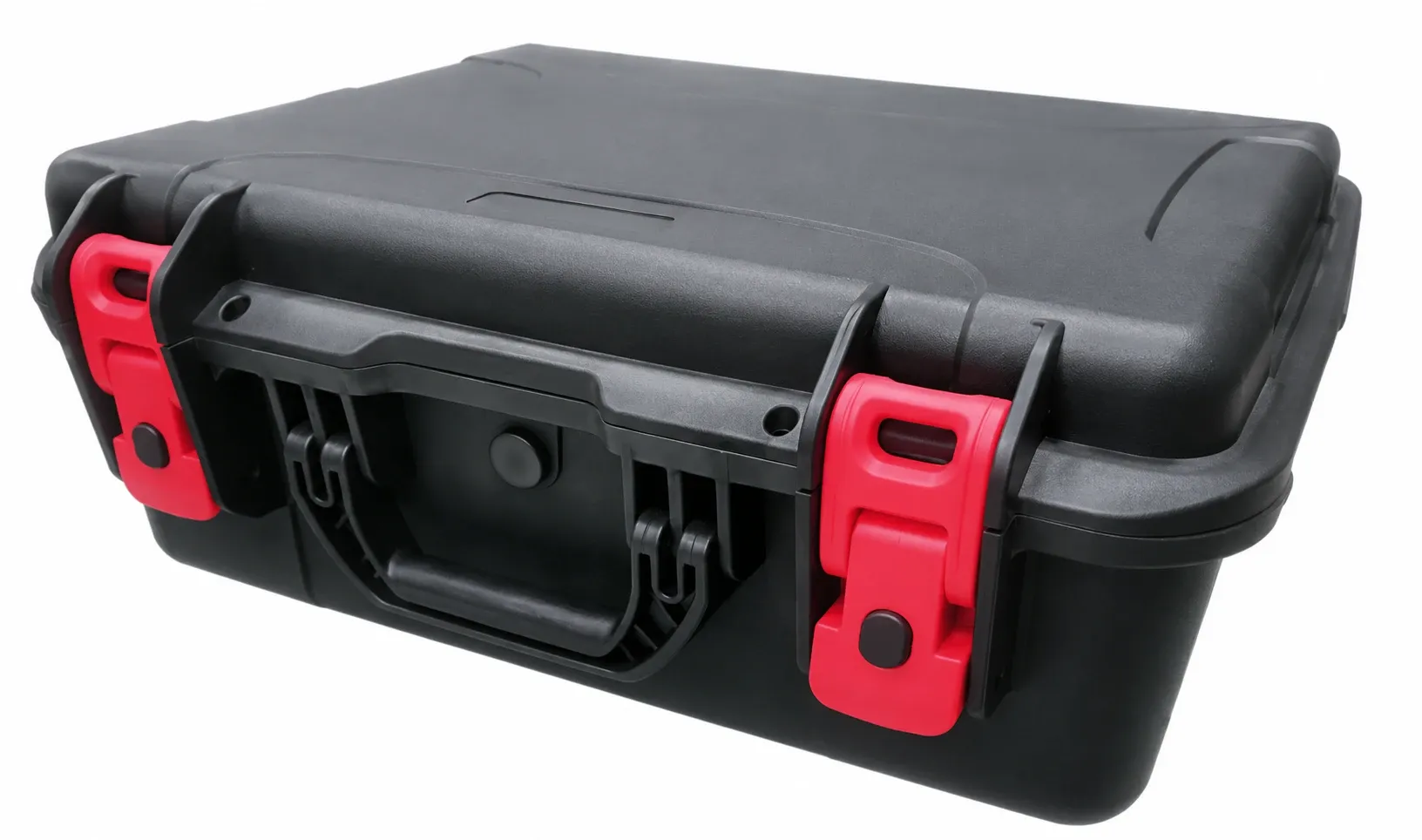
The short answer
These three names overlap, and there is no strict standard that separates them — what matters is what goes inside the case and how it travels. A toolbox holds tools. An equipment case holds equipment that needs protection: instruments, electronics, measuring devices, camera gear, medical kits and similar. "Tool box" written as two words is the same thing as "toolbox" — buyers just spell it both ways. And "hard case" or "waterproof case" is not a separate type at all: it describes how a case is built. Any toolbox or equipment case can be a hard case, and whether it keeps water out is a separate question — see Guide 02. So do not choose by the name on the listing. Choose by what you are putting inside, and check the internal size the way Guide 01 shows.
Step 1 — Toolbox: for tools, carried to the job
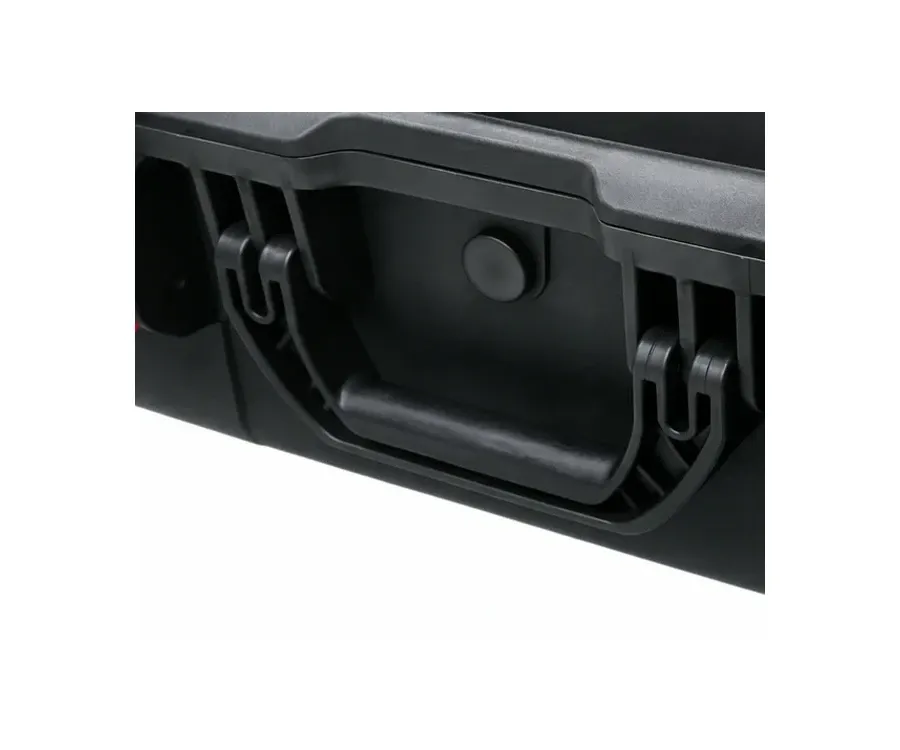
A toolbox is the everyday name for a box that carries hand tools and small power-tool accessories to a job — workshop, vehicle, building site, service call. The tools inside are usually tough themselves, so the case mainly has to be strong, easy to carry and easy to open. If that is what you need, the questions are simple: does it fit your longest tool, does the handle feel right when it is loaded, and does the lid stay shut in a vehicle? The close-up below shows the handle on our DY8810.
Step 2 — "Tool box" is the same product, spelled differently
If you search for "tool box" and "toolbox" you will find the same kinds of cases. Some buyers write it as one word, some as two, and suppliers use both — it is a spelling difference, not a product difference. When you compare listings, compare the internal dimensions and the construction, not the spelling. A "tool box" that is 50 mm too short inside is no use to you, whatever it is called.
Step 3 — Equipment case: for things that must not be knocked about
An equipment case is the name buyers use when the contents are delicate or expensive and the case has to protect them — not just carry them. Think instruments, test and measuring equipment, electronics, camera gear, medical kits, samples. Here the seal, the latches and the inside matter more than they do for a toolbox: the lid seal keeps dust and water out (Guide 02), the latches hold the lid evenly onto that seal, and a foam insert cut to your equipment stops it moving in transit (Guide 03). If your contents would be damaged by a knock or by moving around inside the case, shop as if you are buying an equipment case, even if you would also call it a toolbox — and say so in your inquiry, so the foam and the size are judged against your equipment, not against a generic tool set.
Step 4 — Hard case and waterproof case describe the build, not the type
"Hard case" means a rigid shell rather than a soft bag. "Waterproof case" means the case is built to keep water out — lid seal, latches, construction. Either one can be a toolbox or an equipment case, and neither word on its own tells you how much protection you are getting. A hard case is not automatically waterproof, and a waterproof claim is only as good as the test behind it: ask for the test basis if your use needs a specific level of protection. On this site, the spec table for each model lists Waterproof, and no IP number is published for these models — if your use needs a specific rating, mention it in your inquiry and ask for the test basis.
Step 5 — Choose in three questions, then check the size
Forget the name for a moment and answer these three:
- What goes inside — tools, or equipment that needs protection? That decides whether you need a seal, latches and foam, or mainly strength and a good handle.
- How does it travel — carried by hand, in a vehicle, outdoors, shipped? That decides how much protection the build needs.
- What are the internal dimensions you need? Measure your longest, widest and tallest item (inside its foam, if you are ordering foam), and pick the smallest model whose internal length, width AND height are all larger — see Guide 01 for how to measure.
These are five of our existing-mould models, with their real dimensions:
| Model | External (mm) | Internal (mm) | Waterproof |
|---|---|---|---|
| DY011# | 360 × 270 × 90 | 347 × 220 × 82 | Waterproof |
| DY705# | 425 × 320 × 115 | 420 × 265 × 112 | Waterproof |
| DY706# | 450 × 330 × 130 | 445 × 285 × 124 | Waterproof |
| DY007# | 470 × 360 × 148 | 465 × 310 × 140 | Waterproof |
| DY8810 | 517 × 430 × 150 | 483 × 363 × 140 | Waterproof |
(Model names link to their product pages.) A deeper version of the DY8810 is available on request; please mention your required internal height in your inquiry. If none of these fits, other sizes can be made to order on request — all 81 models on this site are available from existing moulds. On the homepage, the same range is grouped by use under Shop by Category: Plastic Carrying Cases, Rugged Protective Cases, Large Protective Cases and Wheeled Protective Cases.
Ready to get a quote?
Send an inquiry with your model, quantity and required internal dimensions — and tell us what goes inside the case, so we can judge the size, the foam and the protection against your equipment, not just against a name. Samples and small trial orders are available. If you have drawings, please email them to a@ruvenixcases.com after submitting. Phone is optional — email is enough.